



AWS re:Invent 2025: The Future of Kubernetes on EKS

At AWS re:Invent 2025, the Amazon EKS team presented a set of enhancements and future direction for Kubernetes on AWS. The session, titled "The Future of Kubernetes," covered recent platform improvements, scaling innovations, and a three-year roadmap that signals AWS's commitment to making Kubernetes operations managed.
Current data from the CNCF 2024 survey shows that 80% of enterprises now run Kubernetes in production, up from 66% in 2023. Over 90% of companies are at minimum evaluating the platform.
The announcements reflect the following: customers want to use Kubernetes without going to deep into managing Kubernetes platform. This vision drives everything from observability features to managed capabilities that eliminate platform engineering overhead.
This post focuses solely on current and upcoming EKS features. However, the full session recording also includes a presentation by Niall Mullen, Senior Director of Cloud Infrastructure at Netflix, presenting their journey migrating to EKS at massive scale. He mentioned that Netflix serves 300 million paying customers, handles launch rates of 70,000 containers in 5 minutes during region failovers, and migrated their existing Titus container platform (originally built on Mesos, shifted to Kubernetes 5 years ago) to EKS. I'm sharing this as a teaser since it's pretty interesting—definitely watch the full video.
At the end of this article, I've listed links to the different features covered in the AWS session if you're interested in diving deeper.
Kubernetes Adoption
According to the session, there are a few reasons why Kubernetes has become the de facto standard:
Simplicity - Kubernetes wraps 15 years of bash scripts, runbooks, and operational knowledge behind declarative APIs. You rarely start from scratch; need to run Spark? Use the Kubeflow Spark Operator.
Consistency - Run Kubernetes on AWS, on-premises, other clouds, at the edge, or even on fighter jets (EKS has seen this deployment). Your workloads remain portable across environments.
Extensibility - While Kubernetes handles container orchestration by default, the Custom Resource Definition (CRD) model allows you to extend it for any use case. Customers increasingly use EKS to operate their entire business infrastructure, not just containers.
Enhanced Container Registry: ECR Improvements
| Feature | Description | Key Benefit |
|---|---|---|
| Enhanced Scanning with Inspector | Integration with Amazon Inspector provides automated vulnerability scanning for OS and programming language packages. Live inventory shows where vulnerable images are running across clusters. | Know exactly which clusters are running vulnerable images without manual tracking |
| Pull Through Cache | Authenticated pull-through cache with ECR-to-ECR and third-party registry support (Docker Hub, GitHub, etc.) across regions and accounts | Efficient multi-region image distribution and rate limit avoidance without maintaining separate registries |
| Granular Tag Immutability | Tag-level immutability control - make production tags immutable while keeping development tags (like latest) mutable |
Matches real-world workflows where some tags need flexibility while others require stability |
| Archive Storage Class | Low-cost storage tier for rarely accessed images with 90-day minimum retention. Restore within 20 minutes when needed. | Reduce storage costs for compliance-driven image retention while maintaining access when needed |
| Managed Image Signing | Fully managed signing integrated with AWS Signer - sign images with a single API call, no separate infrastructure needed | Eliminate PKI management overhead while ensuring image authenticity and integrity |
Amazon Elastic Container Registry (ECR) processes over 2 billion image pulls daily. Several new capabilities strengthen its position as the foundation for container workloads.
Advanced Scanning and Vulnerability Management
Integration with Amazon Inspector provides enhanced scanning capabilities. The critical improvement addresses a common pain point: when a vulnerable image is detected, where is it actually running?
"You might have dozens, hundreds, thousands of clusters depending on the environment you're running. This feature makes it easier to see a live inventory of vulnerable images that are running."
The live inventory feature connects vulnerability reports directly to running workloads across your entire cluster fleet.
Pull Through Cache Enhancements
ECR now supports authenticated pull through cache with expanded upstream registry capabilities.
This feature works with:
- ECR-to-ECR: Pull images across regions and accounts within your own ECR repositories
- Third-party registries: Docker Hub, GitHub Container Registry, Azure Container Registry, GitLab, Quay, and Kubernetes registry
- Public registries: Amazon ECR Public without authentication overhead
The workflow is simple:
┌─────────────────────┐
│ Upstream Registry   │
│                     │
│ • Docker Hub        │
│ • GitHub (ghcr.io)  │
│ • ECR (us-east-1)   │
│ • Quay.io           │
└──────────┬──────────┘
           │ Pull on demand
           │ (24h refresh)
           ▼
┌─────────────────────┐
│ Your ECR Registry   │
│ (eu-west-1)         │
│                     │
│ Auto-cached repos   │
└──────────┬──────────┘
           │
           │ Fast local pulls
           ▼
    ┌──────────────┐
    │ EKS Cluster  │
    └──────────────┘
This means it's possible to pull images across regions and accounts within own ECR repositories, or cache public images from external registries, creating efficient multi-region distribution patterns without maintaining separate registries. AWS automatically creates repositories, caches images on first pull, and checks for updates every 24 hours.
Key benefits are:
- Avoid rate limits from public registries (pulls come from AWS IP addresses)
- Reduce cross-region bandwidth costs
- Improve image pull performance
- No manual replication or sync workflows needed
Tag Immutability Flexibility
Previously, repositories enforced immutability at the repository level. The new granular tag immutability allows specific tags (like production releases) to be immutable while permitting others (like latest in development) to be mutable. This flexibility matches real-world development workflows.
Archive Storage Class
For compliance-driven organizations storing terabytes of container images, the new archival storage class provides cost optimization. Images that haven't been pulled recently can move to archive storage at lower cost. When needed for audits or unexpected rollbacks, they can be restored from archive.
Managed Image Signing
ECR now offers fully managed image signing integrated with AWS Signer. No separate infrastructure required - sign images with a simple API call, with all actions logged in CloudTrail for audit compliance.
EKS Platform & Observability
| Feature | Description | Key Benefit |
|---|---|---|
| Cluster Insights | Automated daily scans identifying upgrade blockers: deprecated APIs, outdated add-ons, compatibility issues. On-demand refresh available. | Reduce upgrade preparation time and increase reliability of version migrations |
| Version Support Acceleration | New Kubernetes versions available in EKS within 45 days of upstream release (100% track record over 2 years) | Stay current with upstream Kubernetes without extended waiting periods |
| Global Cross-Account Dashboard | AWS's first true global, cross-account, cross-region service view. Centralized visibility of all EKS clusters across your organization. | Executive-level visibility - understand cluster versions, compliance, and upgrade needs across entire fleet |
| Enhanced Network Observability | Single agent exposing granular network metrics: DNS limits, retransmissions, service maps, pod-to-pod flows, cross-AZ traffic, AWS service patterns | Proactive network monitoring and faster root cause analysis for networking issues |
| Managed MCP Server | Hosted Model Context Protocol server with 7+ years of EKS operational knowledge. Q integration in console for instant troubleshooting assistance. | Access support engineer knowledge directly in the console without opening tickets |
| CloudWatch Container Insights | Out-of-the-box monitoring with curated dashboards, EBS metrics, GPU metrics, and application signals support | Opinionated monitoring stack - no decisions on which metrics to collect or alarms to set |
Simplified Upgrades
Kubernetes upgrades remain one of the most challenging operational tasks. AWS has introduced several features to ease this burden.
Cluster Insights scans your clusters daily for potential upgrade blockers:
- Deprecated API usage
- Add-on versions more than two versions behind
- Amazon Linux 2 dependencies (no longer supported in Kubernetes 1.33)
- On-demand refresh capability for immediate validation after fixes
Version Support Acceleration ensures new Kubernetes versions arrive in EKS within 45 days of upstream release. Over the past two years, every release has met this target.
Global Cross-Account Dashboard
Managing clusters across multiple accounts and regions creates visibility challenges. The new EKS global dashboard provides centralized inventory across all organizational boundaries.
This represents AWS's first service offering true global, cross-account, cross-region visibility. Think of it as an executive dashboard - log in Monday morning with your coffee and immediately understand cluster versions, identify upgrade needs, and track compliance status across your entire fleet.
Enhanced Network Observability
Network issues cause the majority of Kubernetes failures. The new enhanced container network observability feature addresses troubleshooting gaps with a single agent that exposes critical metrics to CloudWatch.

Key capabilities include:
- DNS packet limit monitoring
- Retransmission timeout tracking
- Native service maps showing pod-to-pod communication
- Flow visualization for cross-AZ traffic
- Pod-to-service traffic patterns (S3, DynamoDB)
- External traffic monitoring
The flow view makes it immediately obvious when unexpected patterns emerge, such as excessive cross-AZ traffic driving up costs or applications making inefficient S3 calls.
Cluster Insights
Cluster Insights automatically scans the EKS clusters and identifies potential upgrade blockers before attempt an upgrade:
- Deprecated API usage - Detects if the workloads are using Kubernetes APIs that will be removed in the next version
- Outdated add-ons - Flags add-on versions that are more than two versions behind current
- Amazon Linux 2 dependencies - Identifies dependencies on AL2 (which is no longer supported in Kubernetes 1.33+)
- On-demand refresh - Possible to trigger an immediate scan after fixing issues to validate the changes
Managed MCP Server
AWS launched a hosted version of the EKS Model Context Protocol (MCP) server. This tool brings years of EKS operational knowledge into a troubleshooting assistant.
When you encounter a crashed pod or networking issue in the EKS console, you can now click "Hey Q, tell me what's going on." The system automatically integrates with the MCP server, accessing runbooks and troubleshooting guides that support engineers use.
The hosted version includes CloudTrail logging and enterprise security features, making it production-ready.
EKS Ultra Clusters and Scaling
| Feature | Description | Key Benefit |
|---|---|---|
| Ultra Clusters - Scale | Support for 100,000 nodes, 800,000 GPUs, 1.6M Trainium accelerators, 100K concurrent pod scale-ups in minutes | Run AI/ML workloads at unprecedented scale while maintaining Kubernetes conformance |
| In-Memory Database | BoltDB moved from network-attached storage to in-memory tmpfs | Order-of-magnitude performance improvements for read/write operations |
| Partitioned Key Spaces | Hot resource types split into separate etcd clusters | Up to 5x write throughput improvement while preserving durability |
| Offloaded Consensus | AWS journal system replaces Raft-based consensus | Eliminates etcd peer-to-peer communication, provides ultrafast multi-AZ replication |
| Multi-Network Interface Support | Network bandwidth up to 100 Gbps per pod | Critical for AI workloads moving massive datasets |
| Concurrent Image Pulling | SOCI-based container runtime | Cuts image pull times in half |
| Prefix Delegation | Assigns CIDR ranges instead of individual IPs | 3x improvement in node launch rates, optimizes VPC address utilization |
| Auto-Repair | Automatic detection and replacement of unhealthy nodes including GPU instances | Maintains consistent performance without manual intervention |
The announcement of EKS Ultra Clusters in July 2024 represents a rearchitecture of the Kubernetes control plane. Working closely with Anthropic, AWS addressed the challenges of running AI/ML workloads at unprecedented scale.
Scale Specifications
Ultra Clusters support:
- Up to 100,000 nodes in a single cluster
- 800,000 GPUs or 1.6 million Trainium accelerators
- 100,000 concurrent pod scale-ups in minutes
- Full Kubernetes conformance maintained
Architectural Innovations
Three key innovations enable this scale:
In-Memory Database - Moving BoltDB from network-attached storage to in-memory tmpfs-based solution delivers order-of-magnitude performance improvements for read and write operations.
Partitioned Key Spaces - Hot resource types split into separate etcd clusters, delivering up to 5x write throughput while preserving durability.
Offloaded Consensus Management - The most significant change replaces traditional Raft-based consensus with AWS's journal system, battle-tested for over a decade across AWS services. This eliminates etcd peer-to-peer communication requirements and provides ultrafast ordered data replication with multi-AZ durability.
Data Plane Improvements
Beyond control plane enhancements, four key data plane improvements boost application performance:
- Multi-Network Interface Support - Enables network bandwidth up to 100 Gbps per pod, critical for AI workloads moving massive datasets
- Concurrent Image Pulling - New SOCI-based container runtime cuts image pull times in half
- Prefix Delegation - Assigns CIDR ranges instead of individual IPs, improving node launch rates up to 3x while optimizing VPC address utilization
- Auto-Repair Capabilities - Automatic detection and replacement of unhealthy nodes, including accelerated compute instances
Provisioned Control Plane
| Feature | Description | Key Benefit |
|---|---|---|
| Provisioned Control Plane Tiers | Pre-allocated capacity tiers with guaranteed performance. Highest tier: 6,800 concurrent API requests. Switch between Standard and Provisioned modes anytime. | Predictable, consistent performance for critical workloads - no scaling delays during operations |
| API Request Concurrency | How many operations the cluster handles simultaneously | Better multitasking for deployments, scaling, and health checks |
| Pod Scheduling Rate | How quickly cluster responds to scaling events | Faster recovery from disruptions and rapid AI/ML job orchestration |
While Ultra Clusters target massive scale, AWS recognized that all customers deserve predictable, high-performance control planes. The new Provisioned Control Plane brings ultra-scale architecture benefits to standard deployments.
Capacity Tiers
Instead of auto-scaling control planes that introduce latency during scale-up, you can now select pre-allocated capacity tiers:
- Standard Mode - Control plane scales up and down based on load (default behavior)
- Provisioned Mode - Pre-allocated specific tier for guaranteed capacity
Each tier defines three critical dimensions:
- API Request Concurrency - How many operations the cluster handles simultaneously
- Pod Scheduling Rate - How quickly the cluster responds to scaling events
- Cluster Database Size - Headroom for application metadata (16 GB maintained across all tiers)
The highest tier processes up to 6,800 concurrent API requests. You can switch between modes as requirements evolve, and upgrade existing clusters to provisioned mode without disruption.
EKS Capabilities: Not Just Cluster
| Feature | Description | Key Benefit |
|---|---|---|
| Managed Argo CD | Fully managed GitOps with Secrets Manager integration, CodeCommit integration, and automatic cross-account/cross-region networking | Eliminate network configuration complexity for multi-account deployments |
| AWS Controllers for Kubernetes (ACK) | Manage 50+ AWS services using Kubernetes APIs. Supports cross-account and cross-region resource management. | Define infrastructure alongside applications - no separate IaC tools needed |
| Kubernetes Resource Orchestrator (KRO) | Build abstractions over ACK - create custom APIs wrapping AWS resources with organizational standards | Developers use simple APIs; platform teams enforce governance |
The most strategic shift announced is EKS Capabilities, expanding beyond cluster management to handle the complete platform.
The Platform Problem
Getting a production-ready Kubernetes cluster is just the beginning. Applications need:
- Deployment mechanisms
- AWS service provisioning (S3 buckets, ElastiCache, RDS)
- Secrets management
- Network connectivity across accounts and regions
Building and maintaining these platform components requires significant engineering investment.
Managed Argo CD
AWS now offers fully managed Argo CD with AWS-specific integrations:
- Secrets Manager Integration - Native support eliminates GitOps secrets management pain points
- CodeCommit Integration - Simplified credential setup for Git repositories
- Managed Networking - Cross-account and cross-region sync traffic handled behind the scenes
Self-managed Argo requires careful network configuration for multi-account deployments. The managed version eliminates this complexity entirely.
AWS Controllers for Kubernetes (ACK) and Kubernetes Resource Orchestrator (KRO)
These managed capabilities enable Kubernetes-native AWS resource management. Developers define infrastructure alongside application manifests instead of opening tickets to infrastructure teams.
KRO provides abstraction layers over ACK, allowing platform teams to publish custom APIs that wrap AWS resources with organizational standards.
Example workflow:
- Platform team creates a "Database" custom resource that provisions RDS with approved configurations
- Developers request databases through familiar Kubernetes manifests
- Infrastructure provisioning happens automatically, following organizational policies
Three-Year Roadmap
AWS outlined five strategic priorities for EKS development through 2027:
1. Critical Workload Patterns at Any Scale
As clusters grow beyond single-cluster limits, AWS will focus on making multi-cluster workloads easier to manage. The goal is workload distribution across cluster boundaries.
2. AWS Service Integrations
Kubernetes increasingly serves as the front door to AWS. Customers provision EBS, S3, and other services through Kubernetes operators rather than directly through AWS APIs. AWS commits to ensuring all services work well for Kubernetes-native customers.
3. Meeting Workloads Where They Are
From EKS Distro (run anywhere) to cloud-managed EKS to edge deployments, AWS say they will continue supporting wherever workloads need to run. Improvements to outposts support and hybrid node capabilities are coming.
4. Simplified Platform Building
The long-term vision: eliminate the need for large platform engineering teams. Launch more managed capabilities so you can use Kubernetes without operating it.
5. Accelerating Community Innovation
AWS will continue contributing to the Kubernetes ecosystem through open source projects. The approach: adopt existing standards where possible (like Argo CD), create new standards when existing solutions fall short (like Karpenter), and open-source AWS-specific integrations (like ACK).
Key Takeaways
What AWS wants to tell us, they want to commit to manage Kubernetes operatios for their customer.
The following is what was captured from the session:
Observability - From network flow visualization to MCP-powered troubleshooting, AWS is making Kubernetes operations more transparent and debuggable.
Scaling - Ultra Clusters and Provisioned Control Planes bring enterprise-grade performance to workloads of any size while maintaining full Kubernetes conformance.
Operational Simplification - Every announcement reduces the operational burden of running Kubernetes. Upgrades get easier, troubleshooting becomes faster, and platform engineering requirements decrease.
For teams currently evaluating EKS or operating self-managed Kubernetes, these announcements make a case for managed services. The gap between self-managed and AWS-managed Kubernetes continues to widen, not in features or conformance, but in operational overhead.
The future of Kubernetes on AWS is clear: use the platform without becoming a Kubernetes operations expert. Focus on delivering business value while AWS handles the infrastructure complexity.
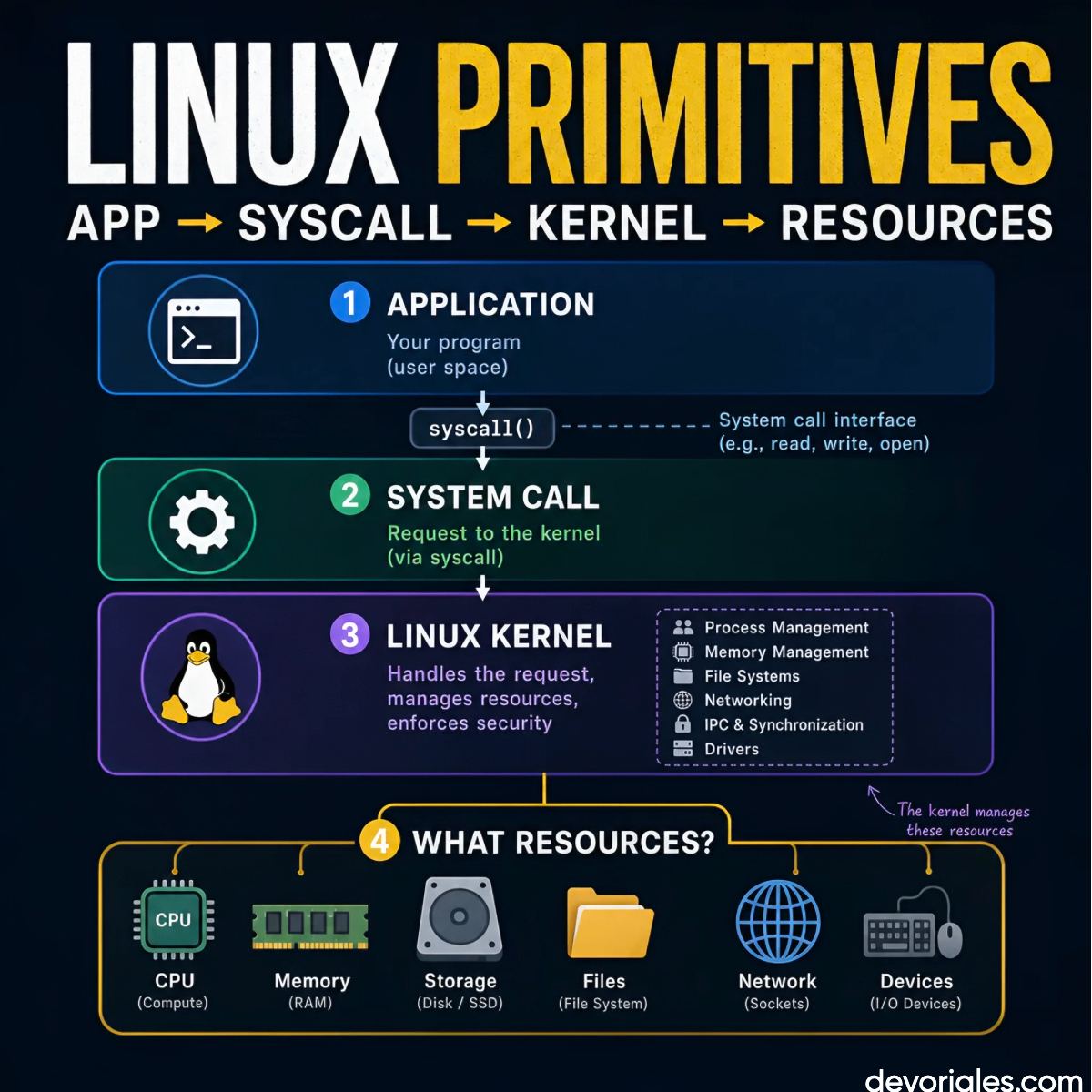
This is basically in line of my own thoughts, Kuberntes will eventually become pretty abstract to the developers. As Linux has become.
AWS Documentation Links by Feature
AWS re:Invent 2025 - The future of Kubernetes on AWS Original session: https://www.youtube.com/watch?v=Q6HT6zFcWzo
ECR (Elastic Container Registry) Features:
Enhanced Scanning with Inspector:
- Main Documentation: https://docs.aws.amazon.com/AmazonECR/latest/userguide/image-scanning-enhanced.html
- Inspector Integration: https://docs.aws.amazon.com/inspector/latest/user/ecr-integration.html
- Scanning ECR: https://docs.aws.amazon.com/inspector/latest/user/scanning-ecr.html
Pull Through Cache:
- Overview: https://docs.aws.amazon.com/AmazonECR/latest/userguide/pull-through-cache.html
- Creating Rules: https://docs.aws.amazon.com/AmazonECR/latest/userguide/pull-through-cache-creating-rule.html
Tag Immutability:
- Main Documentation: https://docs.aws.amazon.com/AmazonECR/latest/userguide/image-tag-mutability.html
- Announcement: https://aws.amazon.com/about-aws/whats-new/2025/07/amazon-ecr-exceptions-tag-immutability/
Archive Storage Class:
- Archiving Images: https://docs.aws.amazon.com/AmazonECR/latest/userguide/archive-image.html
- Overview: https://docs.aws.amazon.com/AmazonECR/latest/userguide/archive_restore_image.html
- Announcement: https://aws.amazon.com/about-aws/whats-new/2025/11/amazon-ecr-archive-storage-class-container-images/
Managed Image Signing:
- Managed Signing: https://docs.aws.amazon.com/AmazonECR/latest/userguide/managed-signing.html
- Image Signing Overview: https://docs.aws.amazon.com/AmazonECR/latest/userguide/image-signing.html
- Announcement: https://aws.amazon.com/about-aws/whats-new/2025/11/amazon-ecr-managed-container-image-signing/
EKS Platform Enhancements:
Cluster Insights & Upgrade Readiness:
- Main Documentation: https://docs.aws.amazon.com/eks/latest/userguide/cluster-insights.html
- Viewing Insights: https://docs.aws.amazon.com/eks/latest/userguide/view-cluster-insights.html
- Announcement: https://aws.amazon.com/about-aws/whats-new/2023/12/amazon-eks-upgrade-insights/
- Upgrade Process: https://docs.aws.amazon.com/eks/latest/userguide/update-cluster.html
EKS Global Dashboard:
- Main Documentation: https://docs.aws.amazon.com/eks/latest/userguide/cluster-dashboard.html
- Announcement Blog: https://aws.amazon.com/blogs/aws/centralize-visibility-of-kubernetes-clusters-across-aws-regions-and-accounts-with-eks-dashboard/
- Deep Dive Blog: https://aws.amazon.com/blogs/containers/deep-dive-amazon-eks-dashboard-for-visibility-into-multi-cluster-operations-and-governance/
- AWS Organizations Integration: https://docs.aws.amazon.com/organizations/latest/userguide/services-that-can-integrate-eks.html
Enhanced Container Network Observability:
- Main Documentation: https://docs.aws.amazon.com/eks/latest/userguide/network-observability.html
- Announcement: https://aws.amazon.com/about-aws/whats-new/2025/11/amazon-eks-enhanced-container-network-observability/
- Blog Post: https://aws.amazon.com/blogs/aws/monitor-network-performance-and-traffic-across-your-eks-clusters-with-container-network-observability/
CloudWatch Container Insights:
- Main Documentation: https://docs.aws.amazon.com/AmazonCloudWatch/latest/monitoring/ContainerInsights.html
- Enhanced Observability Metrics: https://docs.aws.amazon.com/AmazonCloudWatch/latest/monitoring/Container-Insights-metrics-enhanced-EKS.html
- Setup Guide: https://docs.aws.amazon.com/AmazonCloudWatch/latest/monitoring/deploy-container-insights-EKS.html
EKS Capabilities (Argo CD, ACK, KRO):
- Main Documentation: https://docs.aws.amazon.com/eks/latest/userguide/capabilities.html
Additional EKS Features:
EKS Ultra Clusters & Provisioned Control Plane:
EKS Auto Mode:
- https://docs.aws.amazon.com/eks/latest/userguide/ (feature documentation)
Pod Identity:
CNCF Annual survey 2024 Report https://www.cncf.io/reports/cncf-annual-survey-2024/

Comments 0